DETAILS
Stabilizing a Historic Landscape Facing Long-Term Environmental Risk
Decades of structural deterioration, shoreline settlement, and rising water levels left the Tidal Basin increasingly vulnerable to flooding, infrastructure failure, and degradation of one of Washington, DC’s most iconic public landscapes.
Procon provided construction management services for the rehabilitation of the Tidal Basin Seawall, a $113 million coastal resilience project designed to protect nationally significant landmarks, public access areas, and critical shoreline infrastructure while extending the service life of the Tidal Basin by approximately 100 years.
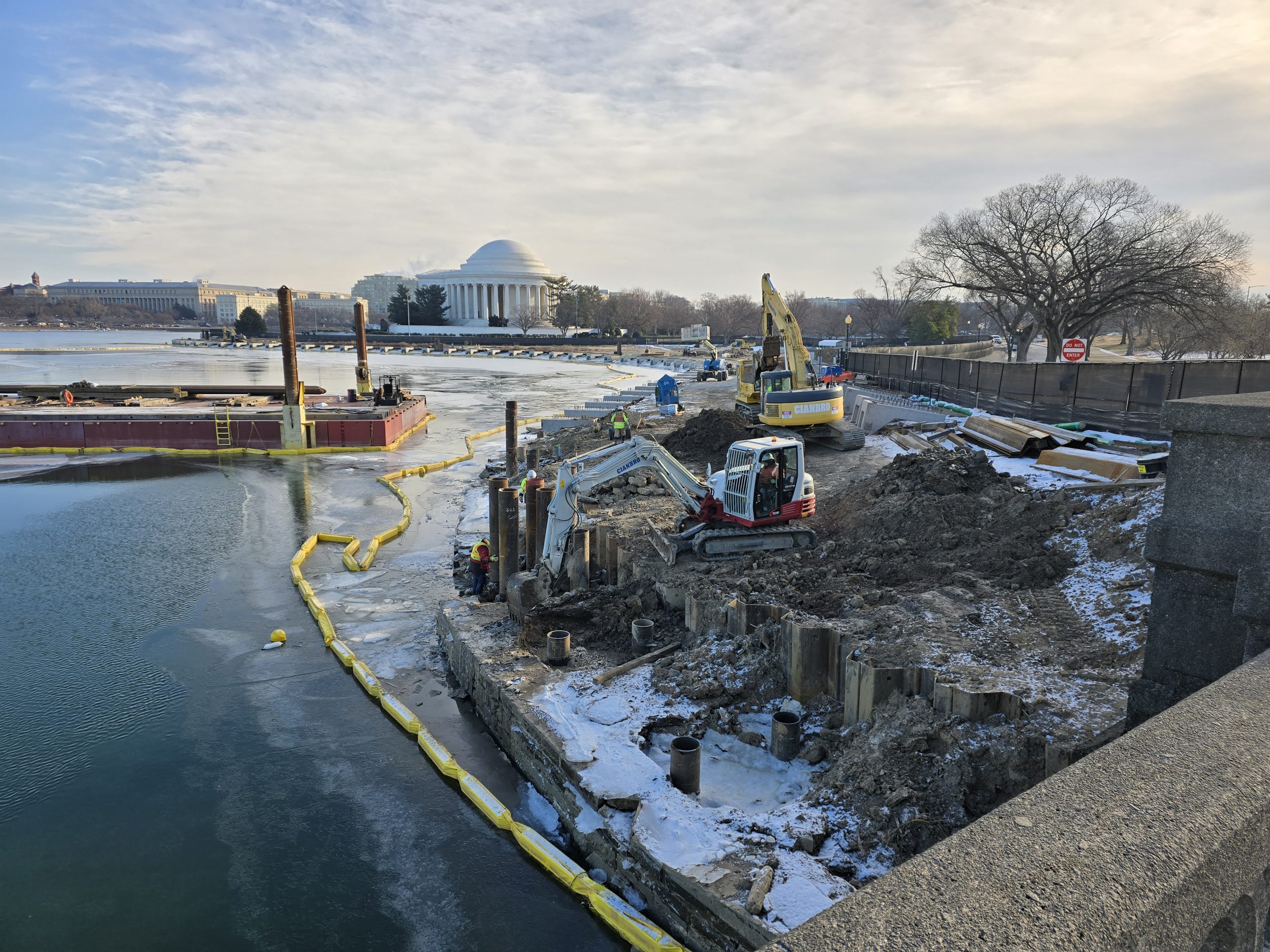
By the time rehabilitation began, portions of the century-old Tidal Basin Seawall had settled more than five feet, contributing to recurring flooding, declining shoreline stability, and increasing risks to the surrounding landscape and infrastructure.
These conditions threatened not only the long-term integrity of the seawall itself, but also adjacent pedestrian pathways, utilities, visitor infrastructure and nationally significant cultural resources, including the Jefferson Memorial and the Tidal Basin’s historic cherry tree groves.
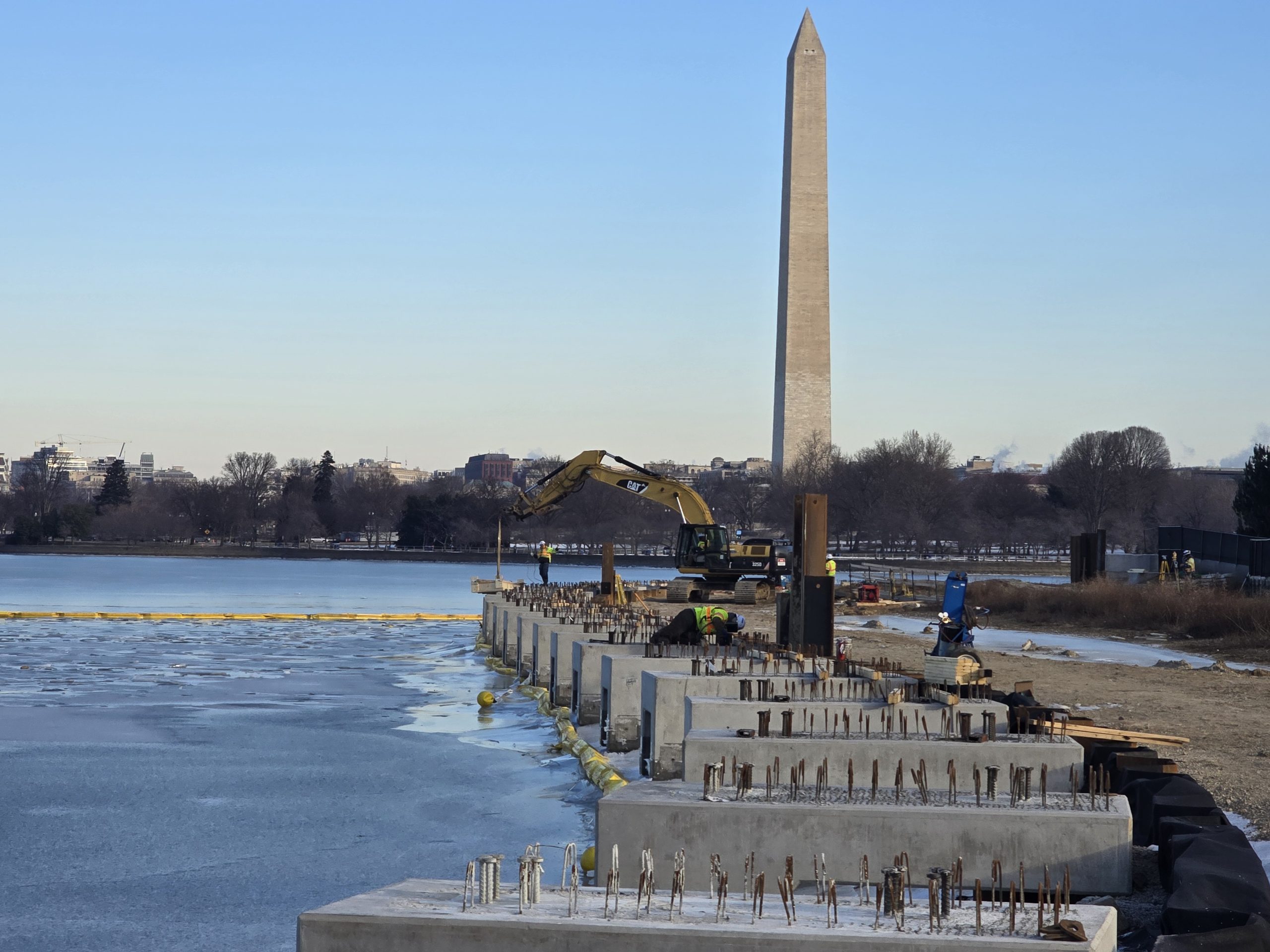
To address these risks, the National Park Service initiated a major infrastructure rehabilitation effort to reconstruct approximately 6,600 linear feet of seawall and improve the basin’s long-term flood resilience and structural performance. The project represented the largest design-build project ever procured by the National Park Service Denver Service Center.
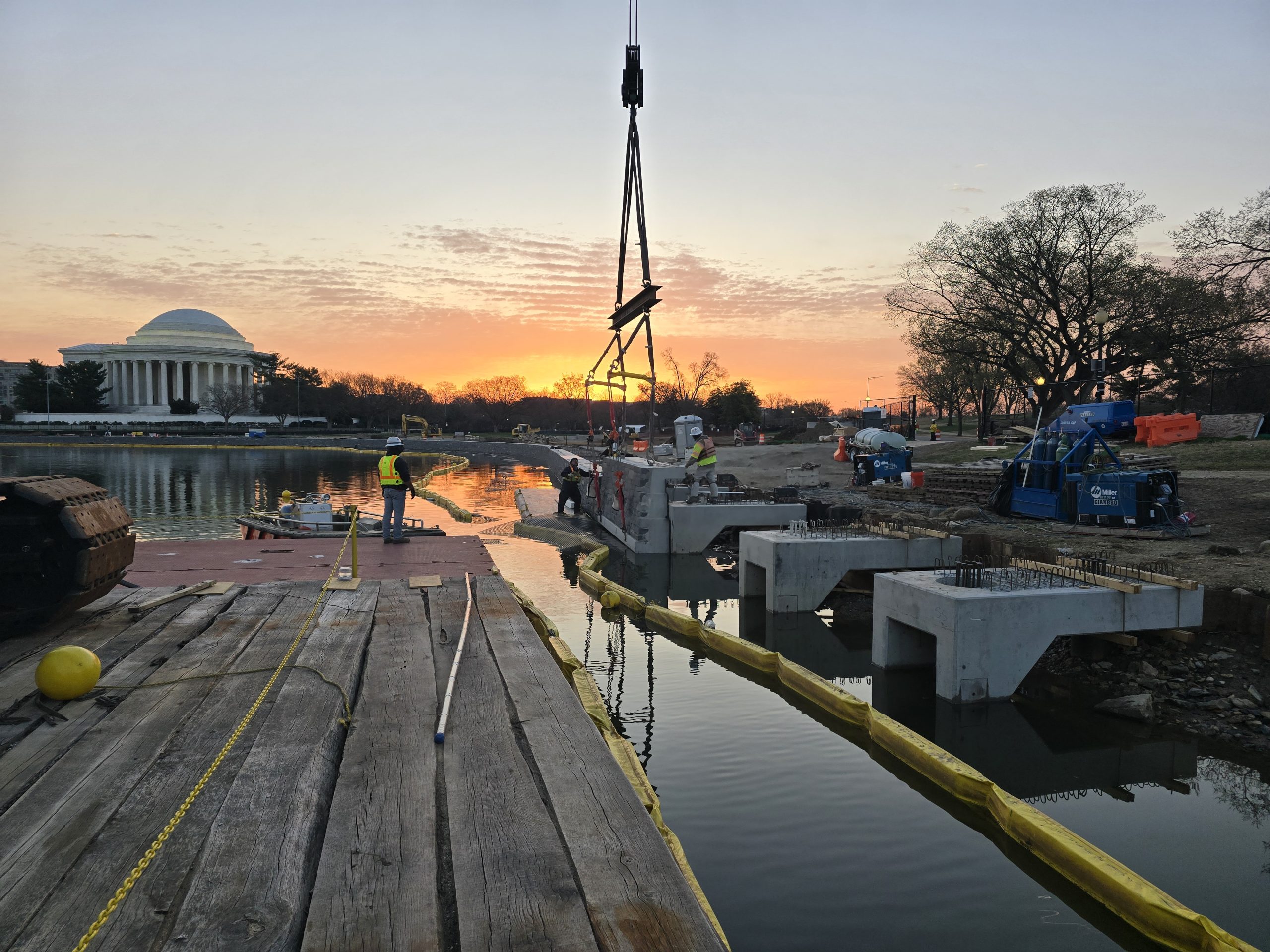
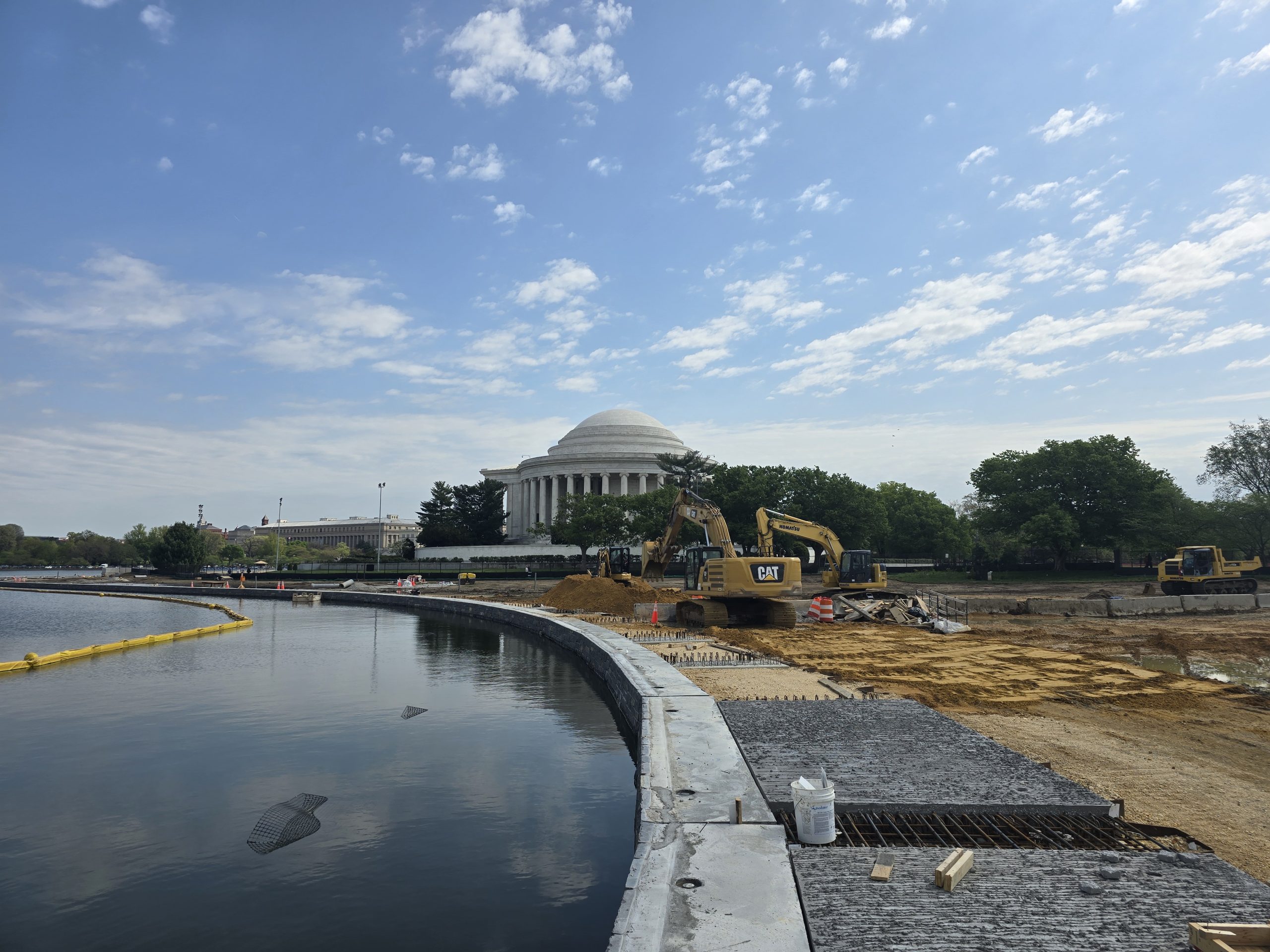
The project included removal and reconstruction of deteriorated seawall systems, installation of deep foundations and structural support systems, shoreline stabilization, stormwater improvements, and restoration of pedestrian pathways and surrounding site infrastructure. As a complex heavy civil engineering project, salvaged historic stone was incorporated into the new seawall design to preserve the visual and historic character of the site while significantly improving durability and resilience.
Because construction occurred within an active and environmentally sensitive public landscape, the work required extensive coordination across landside and waterside operations, including barge-based construction activities, environmental protections, visitor access management, and ongoing stakeholder coordination. The rehabilitation also restored one of the nation’s most recognizable cultural landscapes by creating resilient shoreline infrastructure that supports the long-term health of the Tidal Basin’s historic cherry tree groves, including the planting of 426 new cherry blossom trees.
Through structured oversight and proactive coordination, Procon helped deliver resilient infrastructure improvements that protect one of the nation’s most recognizable civic landscapes for future generations while extending the service life of the shoreline by approximately 100 years.
OUR ROLE
Seawall Infrastructure Oversight
As Construction Manager as Agent (CMa), Procon provided comprehensive construction management services in support of this large-scale waterfront infrastructure project, overseeing contractor performance and ensuring compliance with contract requirements, quality standards, and federal construction practices aligned with USACE delivery expectations.
Oversight of Complex Phasing & Dual-Site Operations
The project required simultaneous landside and waterside construction operations, including barge-based work within a constrained and highly visible environment. Procon supported coordination of sequencing, site logistics, and contractor activities to maintain progress while protecting public access and sensitive site conditions.
Cost, Schedule & Risk Management
Procon performed technical review of submittals and RFIs, conducted schedule analysis and progress evaluations, and provided independent cost estimating and change order reconciliation. The team also conducted proactive quality management activities, including offsite inspections of fabrication facilities, material suppliers, and other project partners to identify potential issues before materials arrived onsite.
By combining early issue identification, rigorous quality oversight, and real-time coordination, Procon minimized rework, maintained production momentum, and supported informed decision-making throughout project delivery. This structured approach contributed to completion approximately eight months ahead of schedule while supporting long-term project performance and durability.
Environmental Stewardship & Stakeholder Coordination
Working within a sensitive historic and environmental setting, Procon coordinated closely with the National Park Service, Mott MacDonald, Cianbro Corporation, regulatory agencies, and field operations to ensure compliance with environmental controls, permit requirements, preservation objectives, and project delivery milestones while maintaining momentum throughout construction.
Procon also supported material testing, environmental compliance, and sustainability initiatives throughout construction, including the reuse of historic seawall stone within the reconstructed shoreline system. These efforts helped preserve the historic character of the Tidal Basin, reduce material waste, and support responsible stewardship of one of the nation’s most significant cultural landscapes.