The On-Ramp to Digital Twins: Why 360° Photos Deliver the Fastest ROI

By Stephen DeVito, Procon’s Director of Technology

Digital twins promise a continuously accurate representation of the built environment — yet most struggle with the same issue: drift. Plans change, site conditions evolve, and without a reliable way to anchor data to reality, even the most advanced models quickly fall out of sync.

The most effective way to prevent that drift isn’t to start with complexity. It’s to start with visibility. If digital twins are the destination, 360° photo documentation is the on-ramp. It’s fast to deploy, inexpensive to maintain, and immediately useful. Captured on a consistent cadence, it becomes the reality layer every other dataset can reconcile to.

Think of it like Google Maps. Traffic data and navigation only work because they’re tied to a constantly updated visual record of the real world. Buildings require the same foundation.

Why 360° Capture Works

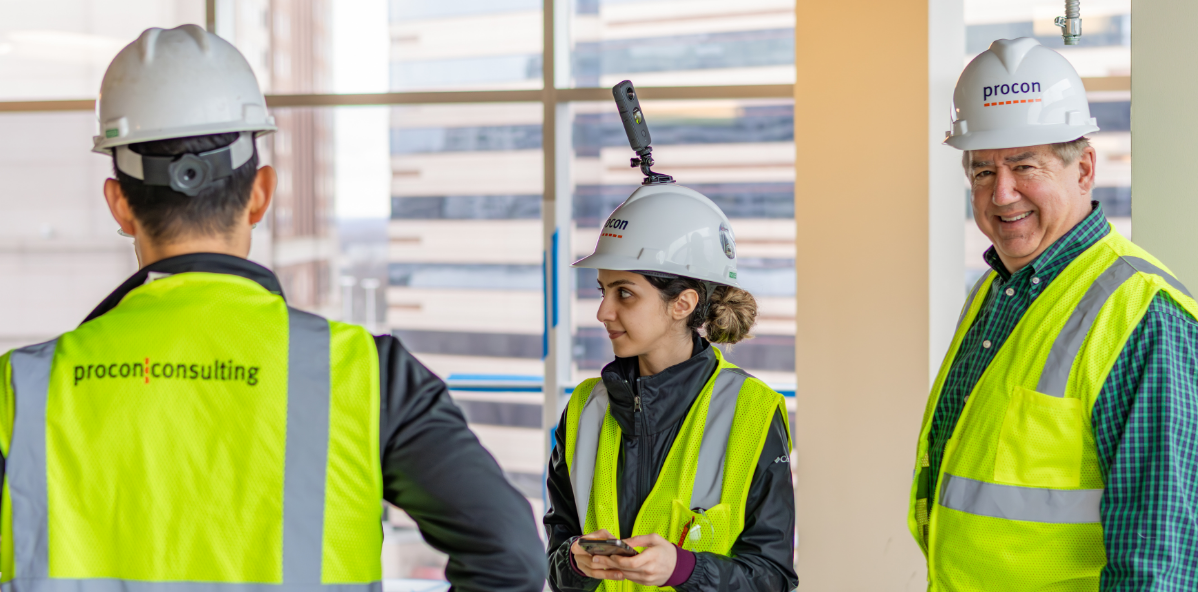
360° capture delivers outsized value for its simplicity. A single walk with a 360° camera creates an immersive, time-stamped record of site conditions — no specialized crews, no disruption, no heavy lift. When those walks occur weekly or at key milestones, the project’s “map of reality” stays current, closing the gap between what’s planned and what’s actually happening in the field.

The real leverage comes from context. When imagery automatically aligns with floor plans or BIM, every photo has a precise location. That eliminates ambiguity, reduces clarification cycles, and allows decisions to be made based on verified conditions rather than assumptions.

How AI Accelerates Insight

AI doesn’t replace expert judgment; it accelerates it. Object detection and change analysis can suggest what’s present, count instances, and highlight what has changed between walks. Suggested tags flow to human review, verification happens quickly, and the record updates with accuracy. Raw imagery becomes structured insight — quantities, status, and exceptions executives can act on without another site visit.

Keeping Digital Twins Grounded

A digital twin without a verified reality layer inevitably drifts. When 360° imagery is mapped to plans and BIM, it stabilizes the system. Photos link directly to assets by room, zone, or equipment ID, creating photo-verified as-builts. At handover, those same records export cleanly into CMMS, reducing friction between construction and operations.

Laser scanning complements this approach. 360° photos provide cadence and narrative, while SLAM and LiDAR (e.g., NavVis VLX/MLX) add geometric precision where it matters. Together, they produce a living digital twin with both visual clarity and measurable accuracy.

Bottom Line: 360° photo documentation is the fastest, lowest-risk way to ground digital twins in reality. Add AI to speed review, scanning for precision, and integration into PMIS and CMMS — and projects move faster, with handover ready on day one.



Procon CEO Kyu Jung Joins Siddhant Mehta’s video podcast, Constructing Tomorrow.

Procon CEO Kyu Jung Joins Siddhant Mehta on Constructing Tomorrow 🛠️

What does it take to start a business? If you have the expertise and a need exists, you can establish a one-person practice with zero capital. What does it take to build a business that scales? That’s the difference between working IN the business and working ON the business.

In the latest episode of Sidd’s podcast, Constructing Tomorrow, Procon CEO and Co-founder Kyu Jung shares candid insights on building a successful technology-forward construction consultancy—and what the AEC industry needs next.

“We were in the 1990s investigating the use of mobile computing…we thought that with all this technology coming, the future of construction could be streamlined with virtual construction and virtual inspection.”

25 years later, that innovation mindset has helped Procon grow into a 220+ person firm delivering high-impact projects across the U.S. and internationally.

Thank you to Siddhant Mehta, whose passion for the AEC industry and engaging questions made for a great discussion on leadership, entrepreneurship, business development, and how AI is shaping what’s next.

CLICK HERE to watch the full interview.


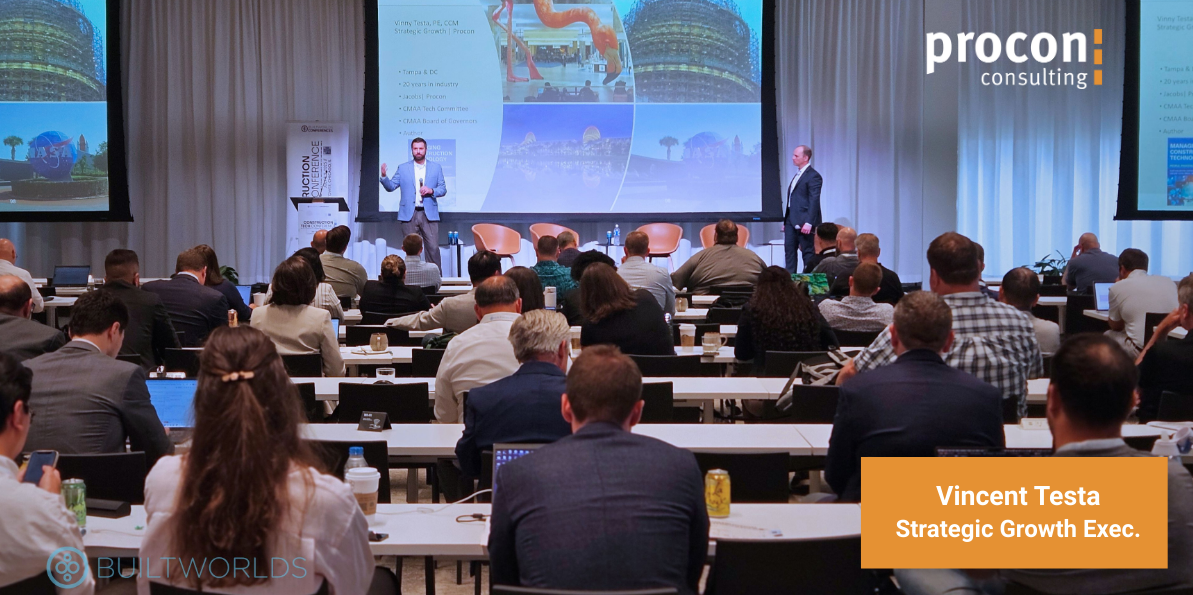
Procon’s Strategic Growth Executive, Vinny Testa, explains the importance of making your data tell the same story, turning complexity into clarity.

We talk about being data-driven all the time but most of us are buried in information. Every project has reports, logs, and spreadsheets piling up. The hard part isn’t collecting data, it’s figuring out what actually
matters and how to make it clear to everyone on the team.

That’s where data visualization comes into play. It’s not about fancy charts or color palettes. It’s about telling a story people can understand. A good dashboard doesn’t just display numbers. It connects the dots and helps the team focus on what’s important.

From recent polling we conducted during presentations at BuiltWorlds and CMAA, more than 40% of organizations say they are using more than 10 systems to collect data on projects. The information exists but it’s scattered across systems and too hard to pull together. When that happens, small problems turn into big ones because no one sees the warning signs early enough.

The best visualizations I’ve seen are simple and practical. They make it easy for people to act, not just observe. I’ve been in meetings where everything changed the moment the team looked at the same dashboard and saw the same story.

So, how do you make the data work for you, and not overwhelm you? Start by choosing a solution-provider, like Procon, that has the expertise to help you navigate the vast array of visualization tools. Then, your solution-provider will help with implementation and team training of the digital service that can unify disparate data into a single, integrated model— ideally one powered by digital twins or virtual intelligence.

Finally, be sure to incorporate models or as-builts that will act as the official operational records of a building. Comprehensive documentation makes facility management more efficient, more informed, and better positioned to maximize long-term performance.

Whether you’re using Power BI, Kahua, or a whiteboard with sticky notes, the goal is the same: get the right information organized, and to the right people at the right time.

Still have questions? Tune into The Breakdown, where I sit down with Procon’s Director of Technology, Stephen DeVito, to unpack these complex digital solutions in an accessible, real-world way.


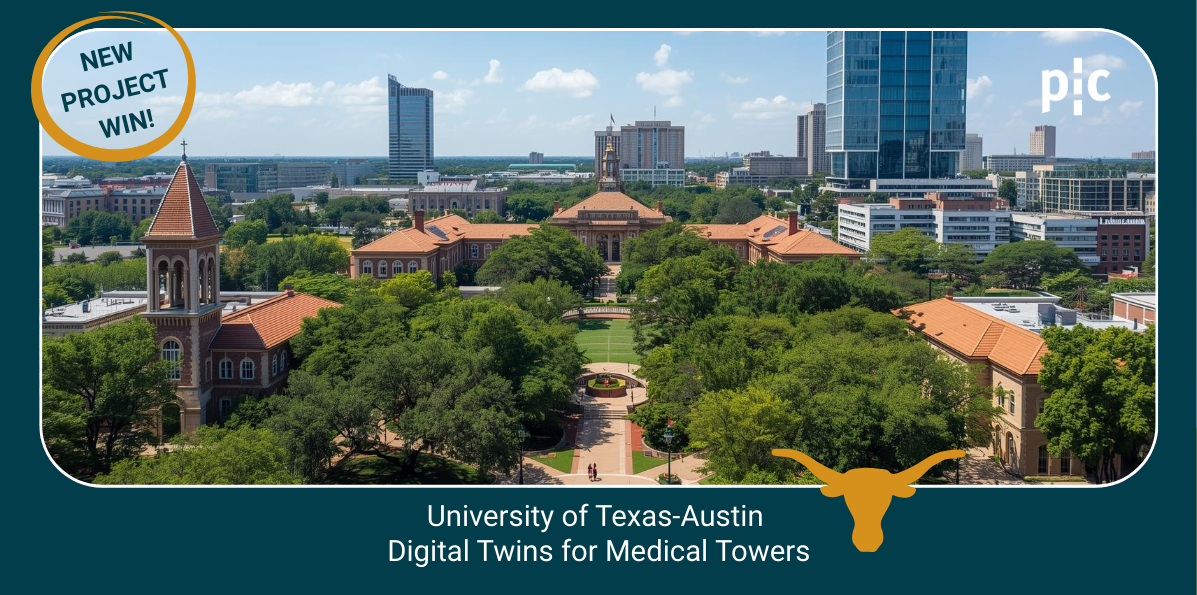
Procon continues to grow in the higher education and healthcare sector with new win as BIM consultant for UT-Austin’s $2.5B medical complex project.

Team Procon is excited to announce our latest win in the higher ed and healthcare sector, supporting a transformative new medical complex for UT-Austin. The UT System’s $2.5B investment will deliver two state-of-the-art hospital towers, expanding MD Anderson Cancer Center and strengthening collaboration among UT Austin, MD Anderson, and Dell Medical School.

Procon has been selected as the project’s BIM consultant, ensuring consistent implementation of project-wide BIM standards across this multi-intuition effort. Our scope includes:

– Preparing for a unified BIM standard for UT Austin
– Coordinating deployment and use of OpenSpace to enhance transparency, collaboration, and project delivery
– Supporting a team driving innovation in healthcare design and construction

This award represents a significant step in expanding Procon’s growing higher education and healthcare footprint while advancing our leadership in BIM and digital delivery.

We’re honored to bring our BIM expertise to a project that will shape the future of medical care, research, and education in Texas and beyond.


Honoring the Architect of the Capitol: Procon and Brown Construction Services Team Up to Build a U.S. Capitol Sculpture out of canned food for CANstruction 2025.

CANstruction is an annual design-build competition organized by the Washington Architectural Foundation to benefit the Capital Area Food Bank (CAFB). Each year, AEC firms across the D.C. region showcase their creativity by constructing large-scale sculptures made entirely of canned goods—all of which are donated to the CAFB to support local families in need.

When we learned that this year’s theme was “World Architecture,” we saw a perfect opportunity to honor one of our distinguished clients, Architect of the Capitol, while collaborating with our trusted partners at Brown Construction Services (BCS), with whom we formed a joint venture and support AOC projects.

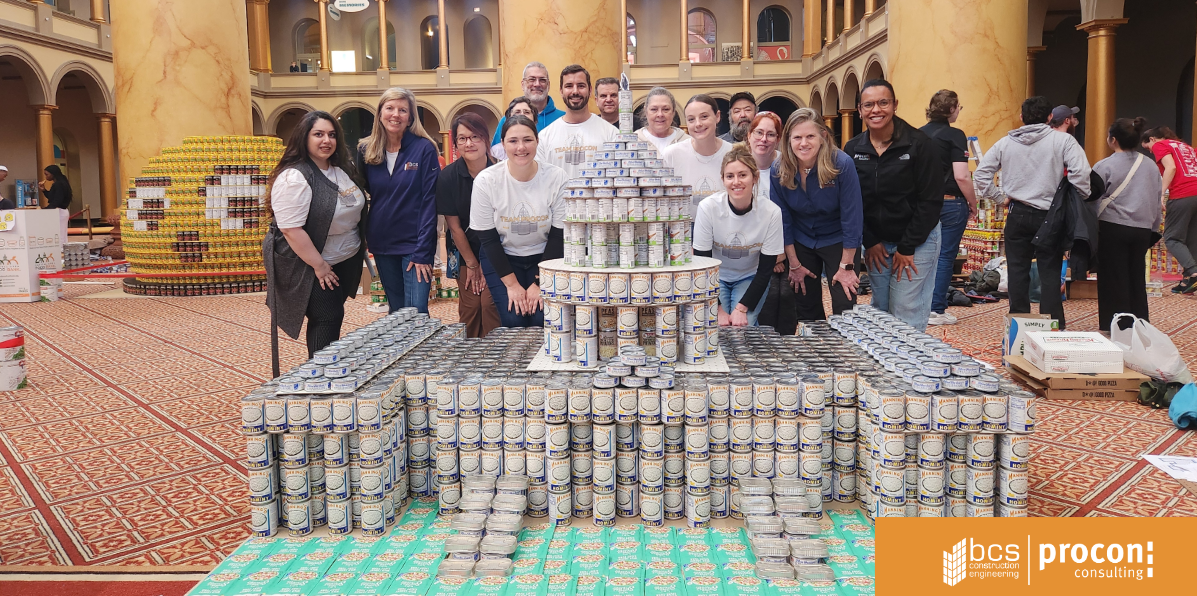
On Build Day, members of Team Procon and Team BCS joined forces to create a 360-degree model of the U.S. Capitol, using more than 2,600 cans of nutritious food. The Capitol is more than a landmark—it is a globally recognized symbol of democracy and one of the most iconic and uniquely American architectural structures in the world.

Thank you to our partners at Brown Construction Services for collaborating on this meaningful effort. It was an inspiring afternoon filled with creativity, teamwork, and community impact—just in time for the holiday season.